
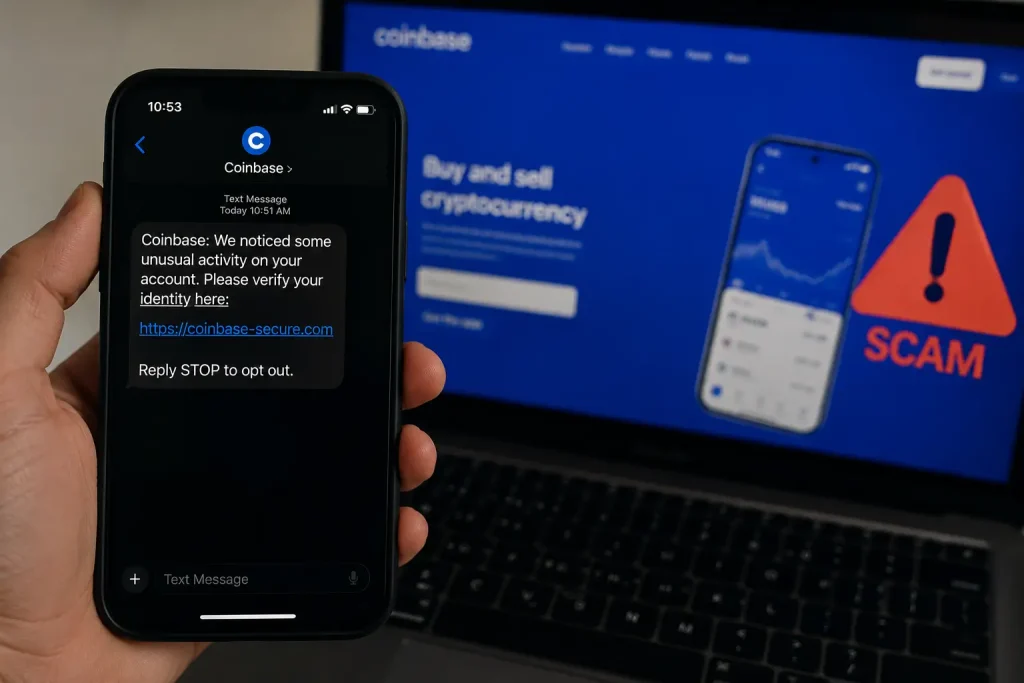
Coinbase scam is one of the fastest-growing scams hitting crypto users right now, and it’s built to make you panic first and think later. In this guide, we’ll break down exactly how the coinbase text message scam works, show you real examples of what these messages look like, and walk you through what to do, whether you just got the text or you already clicked the link.
What Is the Coinbase Text Message Scam?
The coinbase text message scam is a type of SMS phishing also called smishing. Where scammers send fake texts pretending to be from Coinbase. The message usually claims something urgent is happening with your account, a withdrawal, a login from an unknown device, or a security lock and pushes you to click a link or call a number to “fix” it.
Here’s the part that makes this easy to remember: Coinbase does not send text messages about your transactions or account activity. If you get one, it’s a fake coinbase text message, full stop. This one rule alone can save you from almost every version of this scam.
Crypto platforms are a favorite target for scammers because the accounts hold real money that can be moved instantly and can’t easily be reversed once it’s gone. That combination, high value, low reversibility, is exactly why coinbase phishing text campaigns keep showing up.
What These Fake Texts Actually Say
Scammers tend to reuse the same handful of scripts because they work. Some common versions of the coinbase security alert text scam include:
- The fake withdrawal alert: A withdrawal of $2,450 was requested from your Coinbase account. If this wasn’t you, call [number] immediately.
- The fake login alert: Coinbase: Unusual login attempt detected from a new device. Verify your identity now: [link].
- The fake account lock: Coinbase Security: Your account has been temporarily suspended. Click here to restore access.
- The coinbase verification text scam: Your Coinbase account requires identity verification to avoid suspension. Complete verification here: [link].
These messages often come from random, unfamiliar numbers sometimes with international country codes that have nothing to do with your area. The coinbase text number listed is never an official Coinbase line; it’s either a burner number or connects you to a scammer posing as support.
Why This Scam Works So Well
It’s not really about technology, it’s about emotion. These messages are built around a simple formula:
Urgency: act now or lose your money.
Fear: someone else is in your account.
A quick fix: one link, one phone call, problem solved.
That combination short-circuits the part of your brain that would normally pause and double-check things. Add in a cloned login page that looks nearly identical to the real Coinbase site, and even careful people can get caught off guard.
5 Ways to Spot a Fake Coinbase Text
You don’t need to be a security expert to catch these. Just check for these red flags:
1. You get a text at all.
Real Coinbase doesn’t text you about transactions or logins. This is the single biggest giveaway of any coinbase sms scam.
2. The sender number looks off.
Scam texts often come from personal cell numbers or foreign country codes, not a recognizable short code.
3. The message feels urgent or scary.
Phrases like act now, your account will be suspended, or unauthorized withdrawal are designed to rush you.
4. The link doesn’t lead to coinbase.com.
Look closely, scammers use lookalike domains (extra letters, swapped characters, or odd extensions) that are easy to miss at a glance.
5. It asks you to call a number in the text.
Legitimate companies don’t ask you to call a number they texted you. That number connects straight to the scammer.
What to Do If You Received One of These Texts
If a fake coinbase text message lands in your inbox, here’s what to do and just as important, what not to do.
Don’t ❌:
- Click any link in the message.
- Call the phone number provided.
- Reply to the text, even to say stop.
- Enter any personal or account information anywhere the text sends you.
Do ✅:
- Delete the message
- Report it as junk using your phone’s built-in reporting feature
- Forward the text to 7726 (SPAM) if you’re on a major US carrier, this helps flag the number for other users too
- Log into Coinbase directly through the official app or by typing coinbase.com into your browser yourself, just to double-check your account is fine
That’s usually all it takes. Most people can just delete and move on.
What to Do If You Already Clicked the Link or Entered Info
If you’re past the just delete it stage, you clicked the link, entered your login, or gave up a code, don’t panic, but move quickly. Here’s your recovery checklist:
- Change your Coinbase password immediately, using a device you trust and going directly to coinbase.com.
- Turn on two-factor authentication using an authenticator app (not SMS-based codes, since those can also be intercepted).
- Log out of all active sessions through your Coinbase account settings and remove personal information, so any scammer session gets kicked out.
- Check your account activity for any withdrawals or changes you didn’t make.
- Contact Coinbase support directly through the official app or website – never through a number from the scam text.
- Watch your linked bank accounts or cards for unauthorized charges, and consider a card freeze if you’re unsure.
- Change passwords on other accounts if you reused your Coinbase password anywhere else, since identity theft often spreads across accounts.
Acting fast here matters more than acting perfectly. The sooner you lock things down, the smaller the window for a scammer to move funds.
How to Report a Coinbase Scam
Reporting doesn’t just protect you, it helps get scam numbers and sites shut down faster for everyone else. Here’s where to send it:
- Forward the text to 7726 (SPAM) through your phone carrier.
- Email security@coinbase.com with a screenshot of the message. This is the official channel for a coinbase scam email or text report.
- Report to the FTC at reportfraud.ftc.gov.
- Report to the FBI’s Internet Crime Complaint Center (IC3) at ic3.gov, especially if you lost money.
- Report to your bank or card issuer if any financial information was involved.
Other Coinbase-Related Scams to Look For
The text scam is just one piece of a bigger picture. Scammers running smishing campaigns often mix in other tactics too, including:
- Fake Coinbase support calls: scammers posing as Coinbase employees over the phone, sometimes after you call a number from a scam text.
- Fake “insurance” offers: messages claiming you need to buy special crypto insurance to protect your account.
- Coinbase phishing emails: the same tricks as the texts, just delivered to your inbox instead.
- Fake recovery services: scammers who target people who already lost money once, promising to help you get it back for an upfront fee.
The pattern is always the same: unexpected contact, urgent tone, and a request for money, credentials, or access.
Frequently Asked Questions
Q1. Does Coinbase ever text customers?
No. Coinbase does not send SMS messages to verify transactions, confirm logins, or alert you to account activity. Any text claiming otherwise is a scam.
Q2. Is the Coinbase text scam widespread?
Yes. It’s been reported by users across the country and flagged by local law enforcement agencies as one of the more common cryptocurrency-related phishing campaigns currently in circulation.
Q3. Can scammers access my account without my password?
Not directly; but if you enter your password and a 2FA code on a fake login page, they can use both to get in almost immediately. That’s why app-based two-factor authentication is safer than SMS codes.
Q4. What if the text has my name or partial account details?
Scammers often buy leaked personal data from other breaches, so having your name or number doesn’t mean Coinbase specifically was hacked. It just means the scam is more convincing, treat it the same way regardless.
Q5. Is it safe to call the number in the text just to check?
No. The number in the text connects to the scammer, not Coinbase. Always contact Coinbase through its official app or website instead.
Conclusion
If it’s a text, and it’s about your Coinbase account, it’s not real. That one rule handles almost every version of this scam. Don’t click, don’t call, don’t reply on just delete and report it. And if you’ve already clicked something, move fast: change your password, lock down your account, and reach out to Coinbase through official channels only.
Staying a few seconds skeptical is really the only tool you need here, scammers are counting on you reacting fast. Don’t give them that advantage.